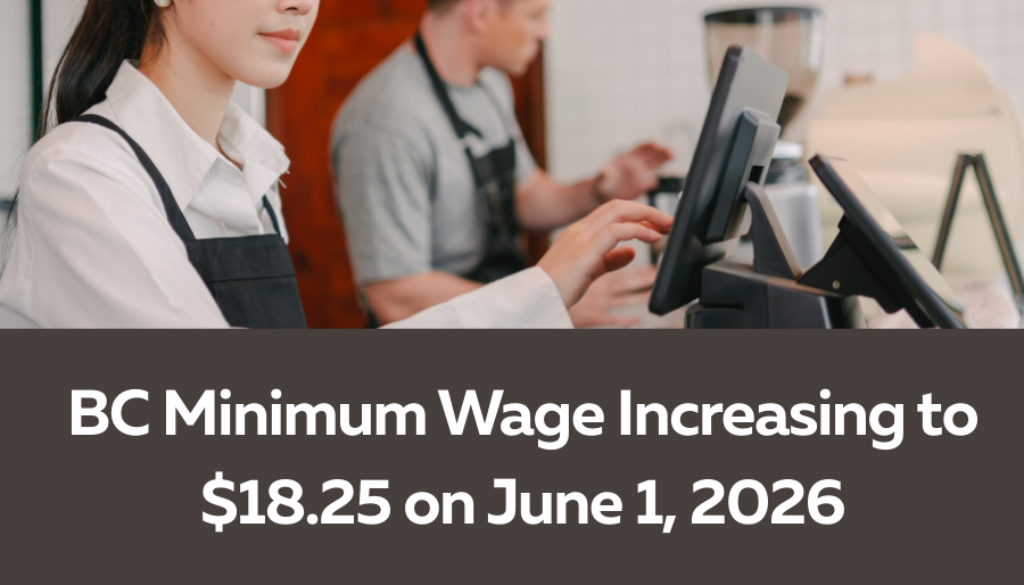
BC Minimum Wage Increasing to $18.25 on June 1, 2026
Businesses across British Columbia will see a new minimum wage take effect this summer. Beginning June 1, 2026, the provincial minimum wage will increase from $17.85 to $18.25 per hour. The adjustment reflects the province’s policy of tying minimum wage increases to the previous year’s inflation rate.
The increase is designed to help lower-income workers keep pace with the rising cost of living while also creating a predictable schedule for employers planning labour costs. According to the provincial government, B.C.’s average inflation rate in 2025 was just over 2.1%, which is the basis for the new wage level.
Who the Increase Applies To
The June 2026 adjustment applies to several categories of workers, including:
The general minimum wage for hourly employees
Resident caretakers and live-in home support workers
Live-in camp leaders
Agricultural workers paid by piece rate
App-based ride-hail and delivery workers, whose minimum rate will increase to $21.89 per hour of engaged time
For agricultural producers, piece-rate wages for hand-harvested crops will also increase by the same percentage later in the year.
A Shift Toward Predictable Increases
B.C. now adjusts minimum wage automatically each year based on inflation. This policy was introduced to avoid the long periods in the past when wages remained unchanged for years. Between 2002 and 2010, for example, minimum wage did not increase at all.
Since then, steady increases have gradually raised the province’s wage floor from $8 per hour in 2001 to one of the highest provincial minimum wages in Canada today.
What This Means for Small Businesses
For many small businesses—particularly in retail, tourism, hospitality, and service industries—minimum wage changes are an important factor when planning staffing costs. While wage increases can create pressure for employers managing operating costs, the predictable annual adjustment allows businesses to plan ahead rather than facing unexpected policy changes.
Across Canada, minimum wages continue to rise in many provinces as governments respond to inflation and cost-of-living pressures, making labour costs a key consideration for employers nationwide.
What This Means for Businesses in Sicamous
For businesses in Sicamous and throughout the Shuswap Region, the change may be particularly relevant for tourism, hospitality, retail, and seasonal businesses that rely on entry-level and part-time staff.
Employers may wish to review:
Payroll systems and wage structures
Seasonal hiring budgets for the summer tourism season
Staffing models and scheduling practices
At the same time, higher wages can increase spending power for workers, which may also benefit local economies and community businesses.
The Sicamous & District Chamber of Commerce will continue to share updates on provincial policies and labour changes that may impact businesses and employers in our community.